
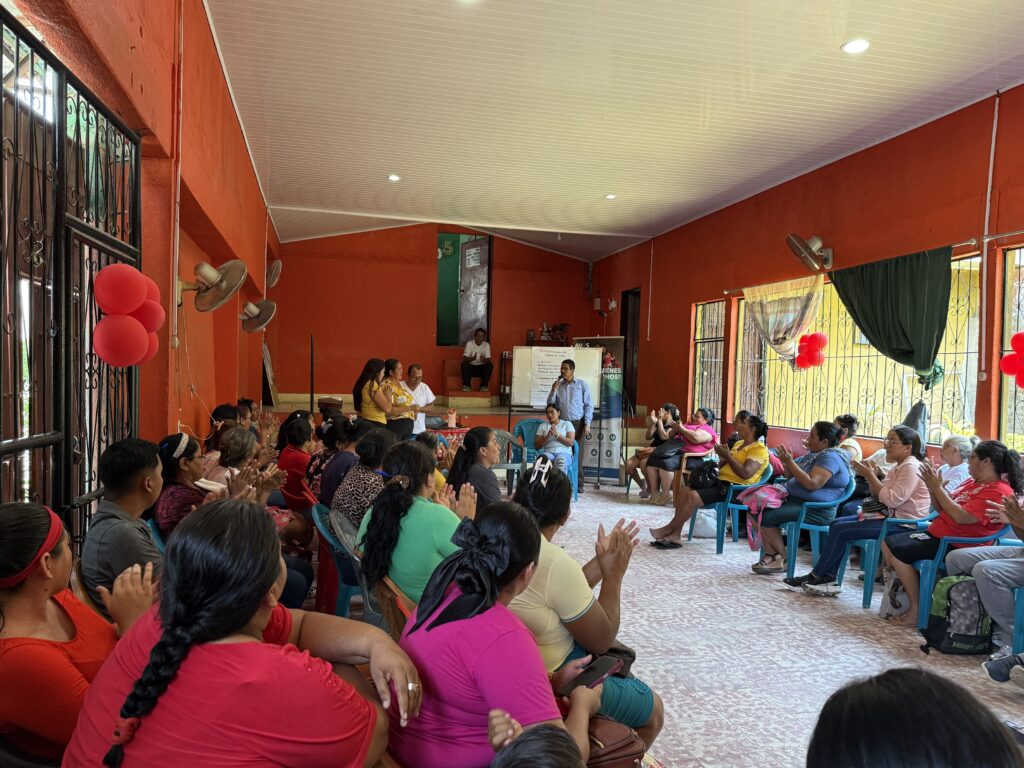
In May, a gathering of community health volunteers in Villanueva became something more than a training session.
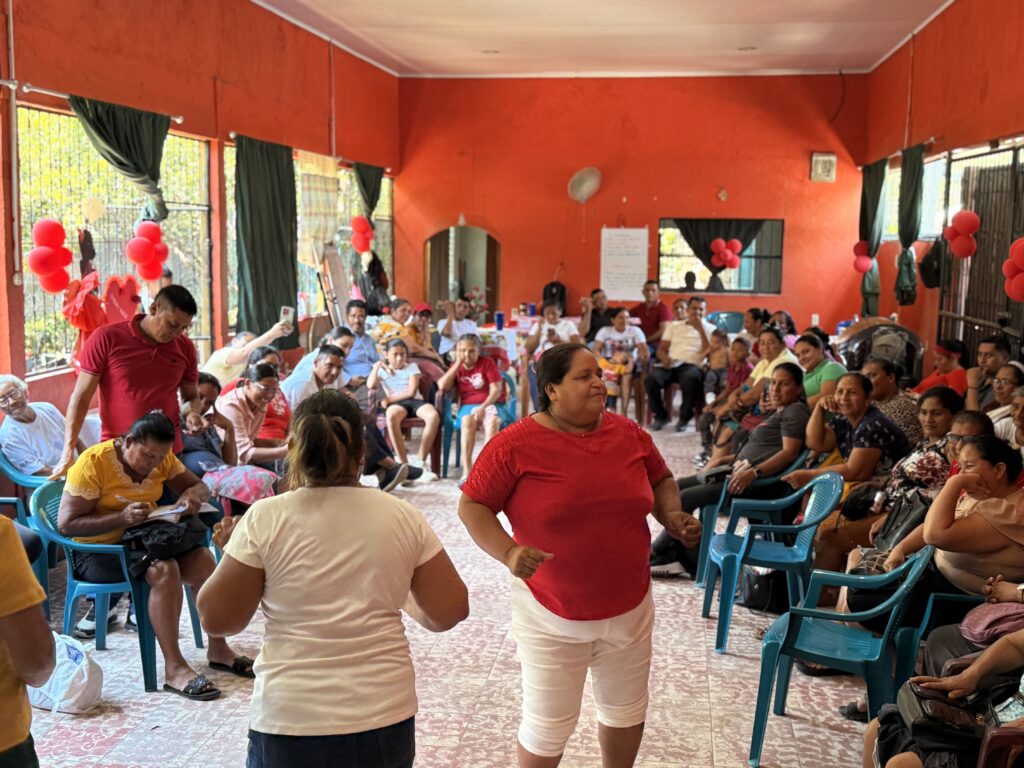
It was also a Mother’s Day celebration — a moment to honor women, mothers, and the vital role they play in the wellbeing of their families and communities. But alongside the music, the laughter, and the joy, the group opened a space for a conversation that was both sensitive and necessary: cervical cancer, breast cancer, and the fears that keep women from seeking the care they deserve.
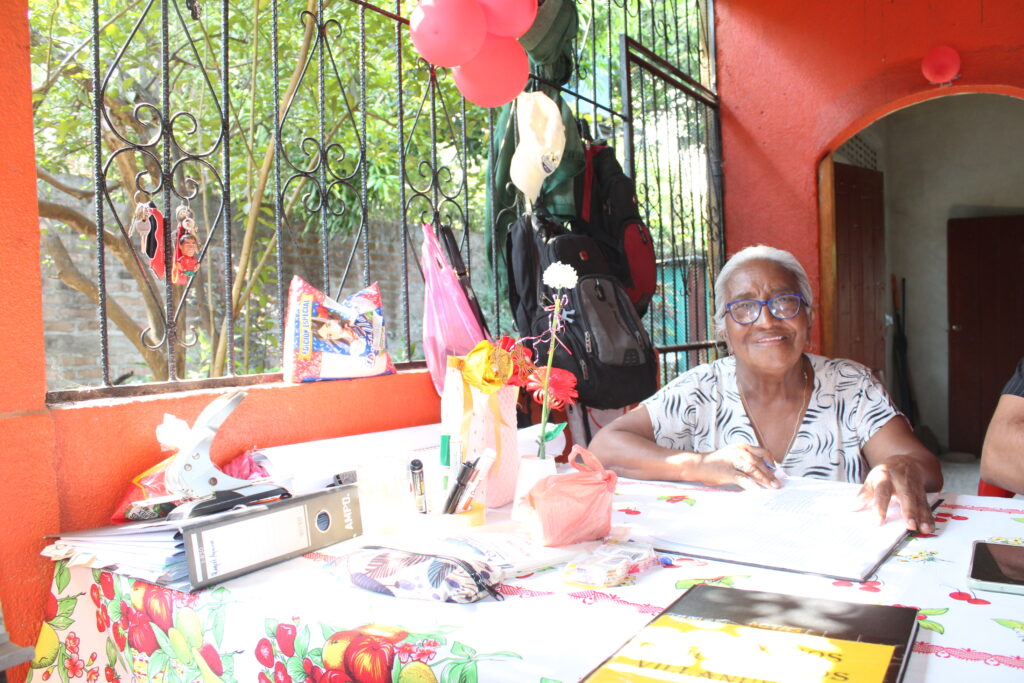

The ones who care for everyone else
In communities across Nicaragua — rural and urban alike — women are often the first to care for everyone around them. They raise children, sustain families, show up for their neighbors, and quietly hold communities together. But when it comes to their own health, especially gynecological care, many still face barriers that go beyond distance or cost. Some barriers are made of fear. Of shame. Of misinformation passed down in whispers. Of silence that has lasted too long.
That is why conversations like this one matter.
When the room softened
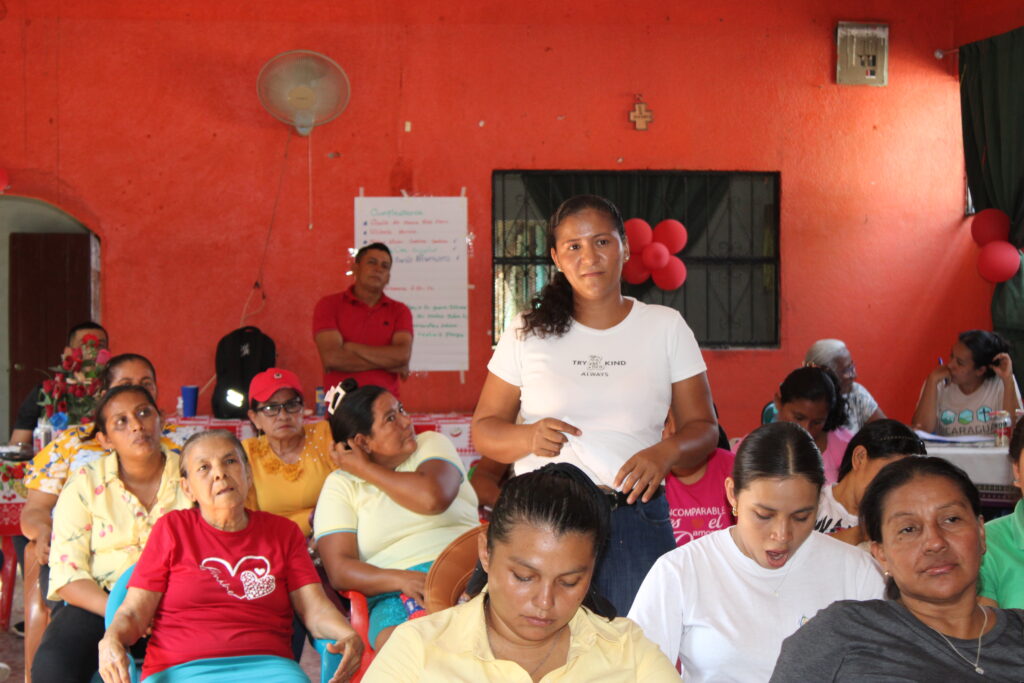
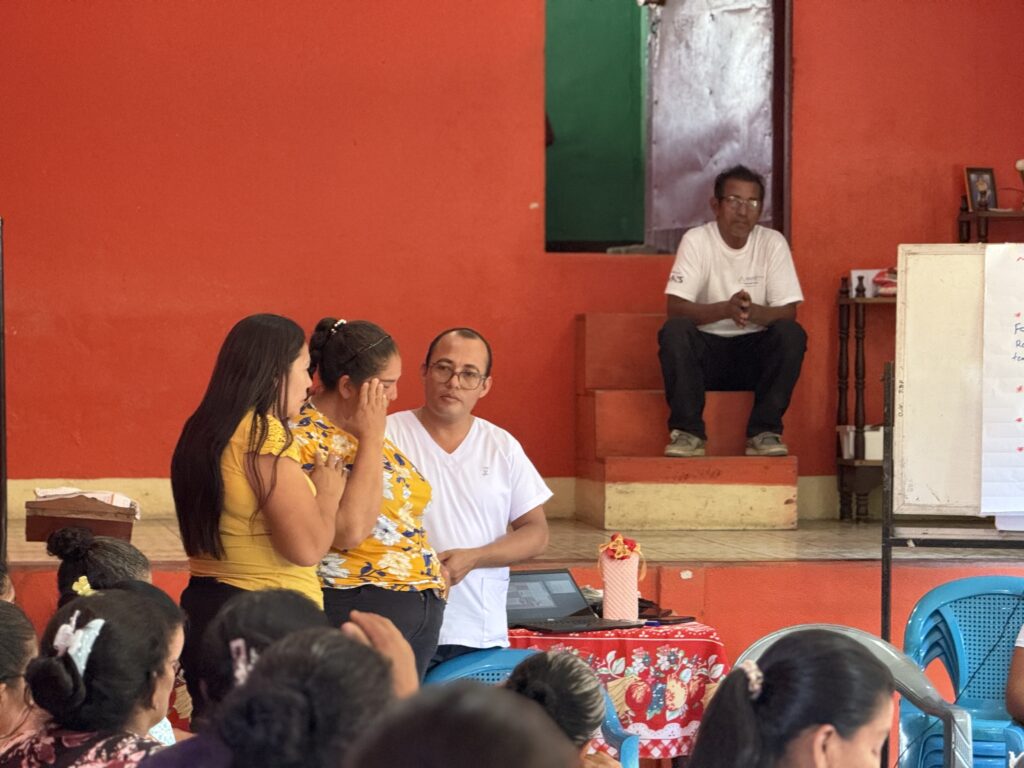
During the gathering, Socorro, a member of the AMOS staff, led a discussion on cervical cancer and the importance of the Pap smear test. The topic was delicate, but the space was safe. And as the conversation unfolded, women began sharing stories that revealed just how deeply misinformation can shape — and sometimes cost — a life.
One woman told the story of someone who died from cervical cancer and left behind a two-month-old baby. Her words settled over the room like a weight. This was not an abstract topic. It was a reality with a name, a face, and a child left without a mother.
A physician from the Ministry of Health also addressed the group, speaking directly to one of the fears many women carry quietly: the shame of being seen, of being examined, of going through a procedure that feels deeply personal. He responded with honesty — and with humor. He reminded them that health workers perform many Pap smear tests every day, and that the moment women dread is, for the provider, simply part of caring for someone.
The women laughed. And in that laughter, something loosened.
Then Doña Josefina shared another example of the myths still circulating in communities. She described a young woman who believed that getting a Pap smear test was connected to abortion.
Her testimony was a reminder that health education cannot simply tell women what to do. It must also listen — and respond to the fears people carry but rarely say out loud.

A lesson that made everyone laugh — and think
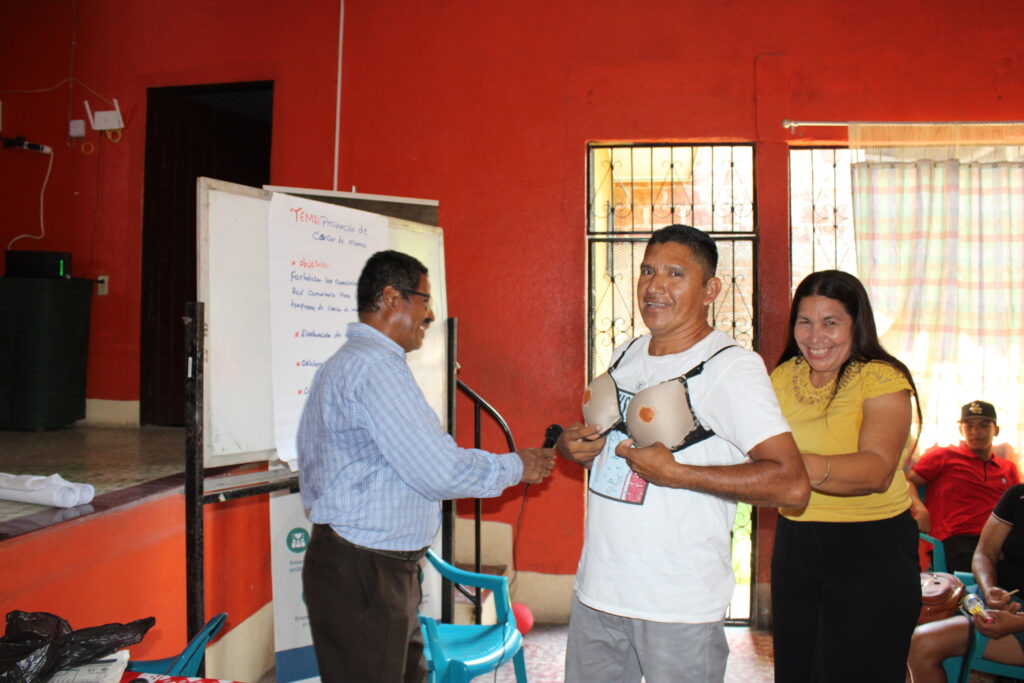
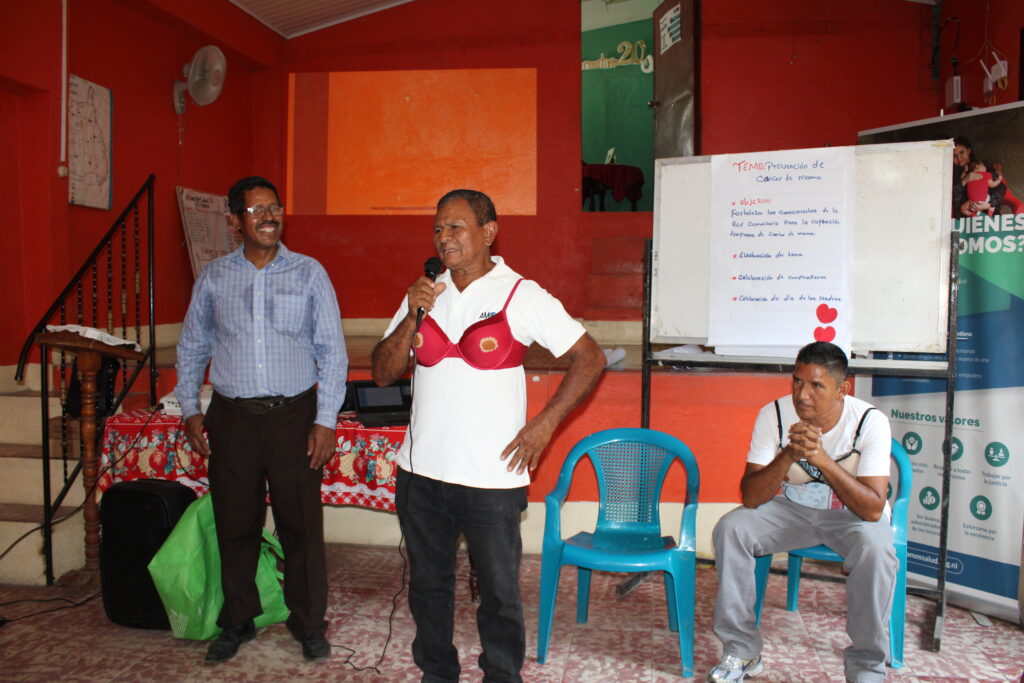
After the discussion on cervical cancer, Socorro led another activity: breast self-exams. To make the lesson practical and memorable, he had prepared demonstration models. The men in the room were invited to participate — to wear the models and help demonstrate the exam process.
At first, there was hesitation. Then there was laughter. Then there was real engagement.
The moment was playful, but the message was serious: women’s health is not only a women’s issue. Families and communities grow stronger when everyone learns to recognize warning signs, support prevention, and encourage care — without shame.
She was no longer carrying it alone
The gathering ended with dancing, questions, and prizes. But before it closed, one woman found the courage to speak.
Elizabeth shared that she does not like to talk about breast cancer — because for some time now, she has felt a lump, and still does not have a clear answer about what it is.
Her voice brought the room to a quiet stillness. Another woman stood and crossed the room to hold her. The group responded with applause — not because the fear was gone, but because she was no longer carrying it alone.
That is the power of community health work.
It is not only about training volunteers or delivering medical information. It is about building spaces where people feel safe enough to ask questions, name their fears, and reach for one another. It is about replacing shame with knowledge, silence with conversation, and isolation with care.
When women are supported, communities are healthier
At AMOS, community health volunteers continue to serve as a bridge between health services and the people who need them most. Equipped with training, support, and accompaniment, they carry life-saving knowledge back to their communities — helping women and families make informed decisions about their health.
This Mother’s Day gathering was a reminder that honoring mothers also means caring for their health. Listening to their concerns. And making sure they know — clearly and without doubt — that they are not alone.
Because when women are informed, supported, and encouraged to care for themselves, entire communities become healthier.

What wonderful programming!
Thank you for informing us about the amazing work you are doing. Education and sharing are so important. May God continue to bless all your efforts.