
Lucía was nine years old the first time she taught someone else about health.
She had joined a community program called Niño a Niño (Child to Child) as a participant. Before long she was a promoter herself, passing on what she had just learned to the children and families around her. She has been doing some version of that ever since.
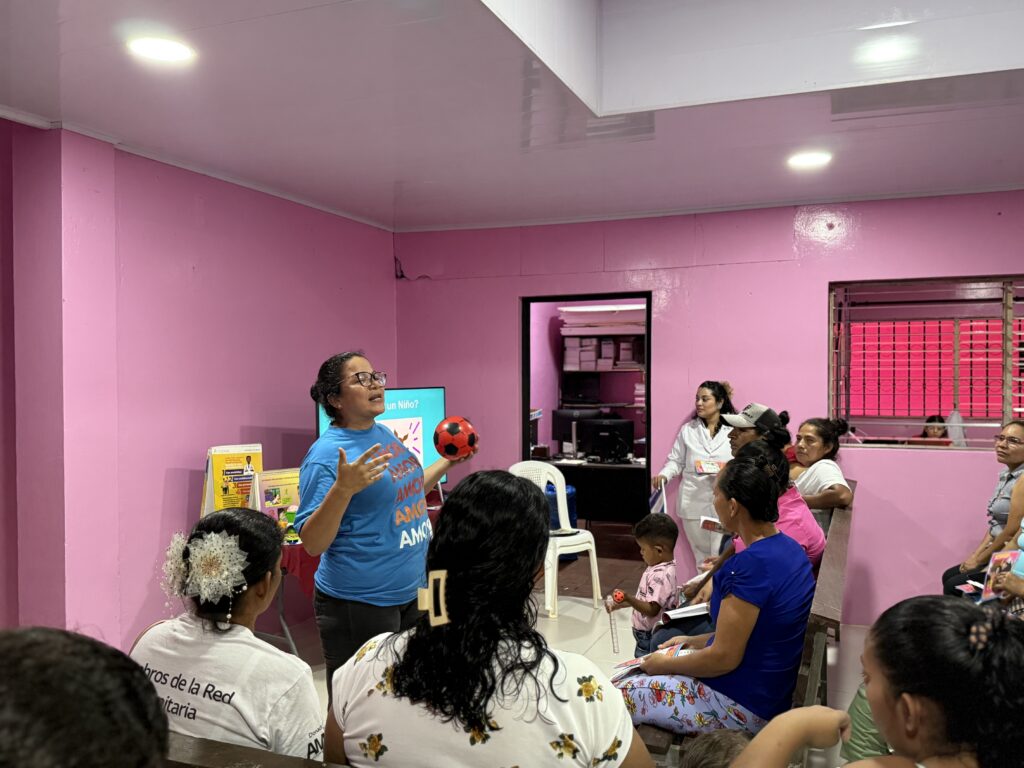
Today Lucía is part of the AMOS programs team, working alongside Community Health Workers in rural communities and with families in Nejapa, AMOS’s home community. Her focus is maternal and child health: prenatal care, health education, and early childhood stimulation: the play, talk, and touch that shape how a baby’s brain develops in the first years of life.
Preparation is part of the promise
Before any training begins, Lucía studies Ministry of Health guidelines, updates the educational content, and works out how each topic will actually be taught.
“We always include not only the theoretical part, but also a moment of practice and reflection,” she says, so that participants leave able to name the changes their own families and communities need.
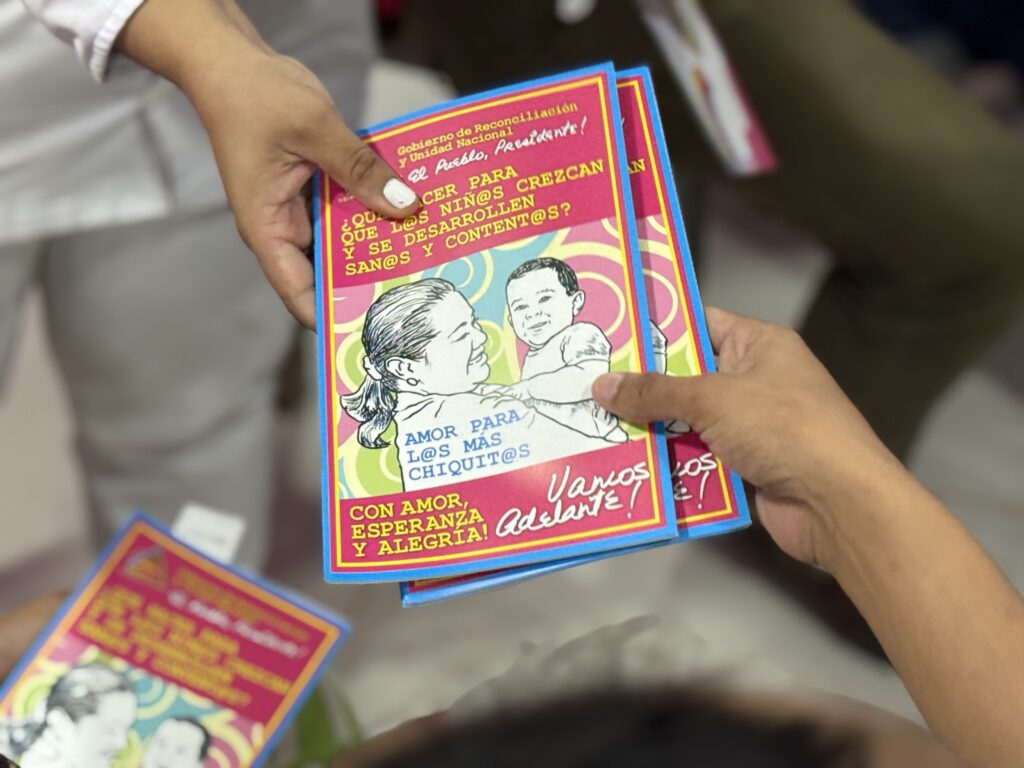
It is a small discipline with a long reach. A session that ends in reflection instead of a lecture is a session people can repeat at home.
“I think community networks are the arm that reaches what clinical medicine cannot: prevention.”
Coming back and finding it still there
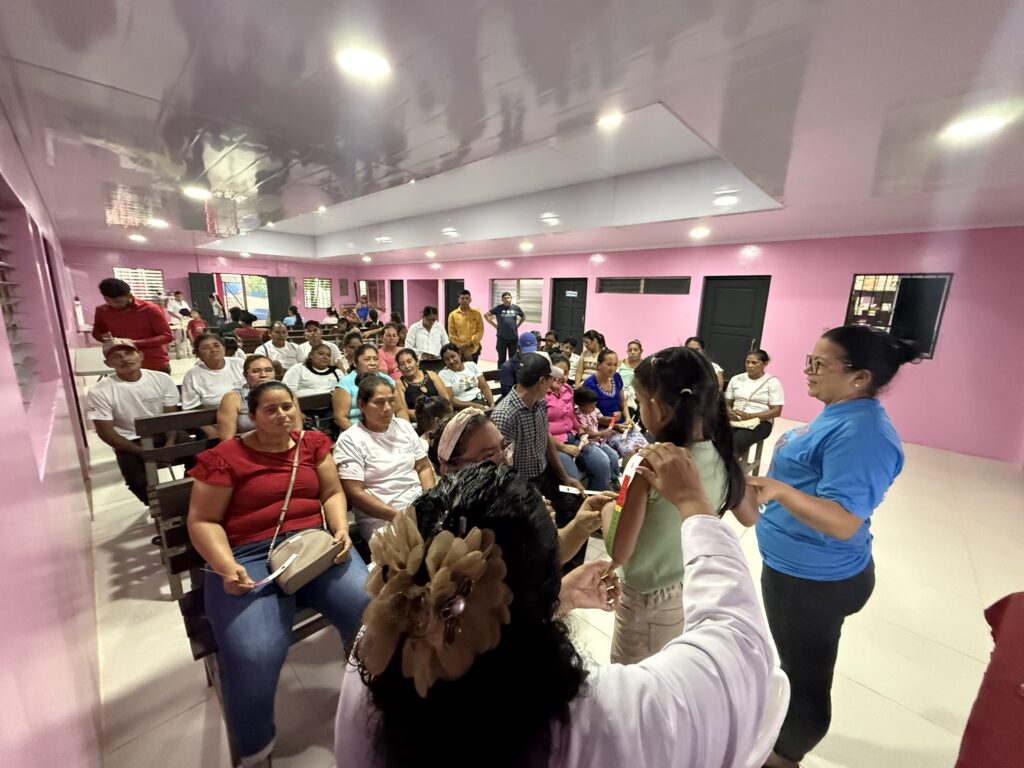
Lucía had returned to communities where AMOS had helped families set up spaces for early childhood stimulation and they are still running, without AMOS in the room.
“That fills me with great satisfaction,” she says. “A project that was perhaps not so visible, but is changing lives, continues to function.”
She sees the same thing in the Community Health Workers. Return to a community years after a training, and the same volunteers are still there, still serving, building on what they learned.
“That tells you a lot about the sustainability of the investment,” Lucía explains. “The person who was trained is still there and continues providing their service with greater capacity.”
Why this is what your gift buys
A training session lasts a day. What it becomes lasts much longer: a mother who knows the warning signs in her own pregnancy, a father who plays with his baby differently, a health worker whose village can reach her at midnight.
Lucía knows how far that reach goes, because she is what it looks like thirty years on: a nine-year-old promoter who never stopped teaching.
