
In many rural communities, when someone gets hurt, the first response does not always happen at a health center. Sometimes, it happens at home, with whatever is available: leaves, coffee, salt, mud, or a piece of cloth.

These practices are often passed down through generations as quick ways to respond in an emergency. They usually come from a desire to help. But without proper guidance, they can also increase the risk of infection, complications, or delays in getting the medical care a person needs.
That is why a wound care workshop led by Socorro, a member of the AMOS staff, with the support of volunteers from Saint John’s Episcopal Church, created such an important space for learning, conversation, and prevention.
To begin the workshop, a mannequin was prepared along with some of the materials that people in rural communities commonly use to treat wounds: leaves, coffee, salt, and mud. This hands-on activity opened the door to an honest conversation about what many families have done out of habit, necessity, or lack of access to medical information.

Among the participants were three women who arrived together: Consuelo, a community leader; Ada Gloria, a community health volunteer; and Jenny, Ada Gloria’s 15-year-old daughter.
For Consuelo, the workshop was an opportunity to share experiences and learn things she had not known before.
“For me, it was beautiful because we shared many ideas and things we didn’t know,” Consuelo said.
She learned how to care for wounds properly and how to use gloves to protect both the person who is injured and the person providing help. But one of the things that surprised her most was the conversation about using leaves and coffee on wounds.
“I used to treat wounds with coffee, and then they started talking about leaves. I didn’t know about that. In the end, it turned out that neither one was good,” she shared.
That lesson changed the way she thinks about responding to an injury. Now, if something similar happens again, Consuelo knows the most important thing is to take the person to the health center.
Although Consuelo is not a community health volunteer, her presence at the workshop was strategic. As a community leader, her role is to bring people together and coordinate teamwork. When a leader like Consuelo learns something new, that knowledge does not stay with one person. It can reach many families.
Ada Gloria also came to the workshop with curiosity. She was invited by the doctor at the health center and decided to attend because she thought, “Maybe they will teach us something new.” And they did.
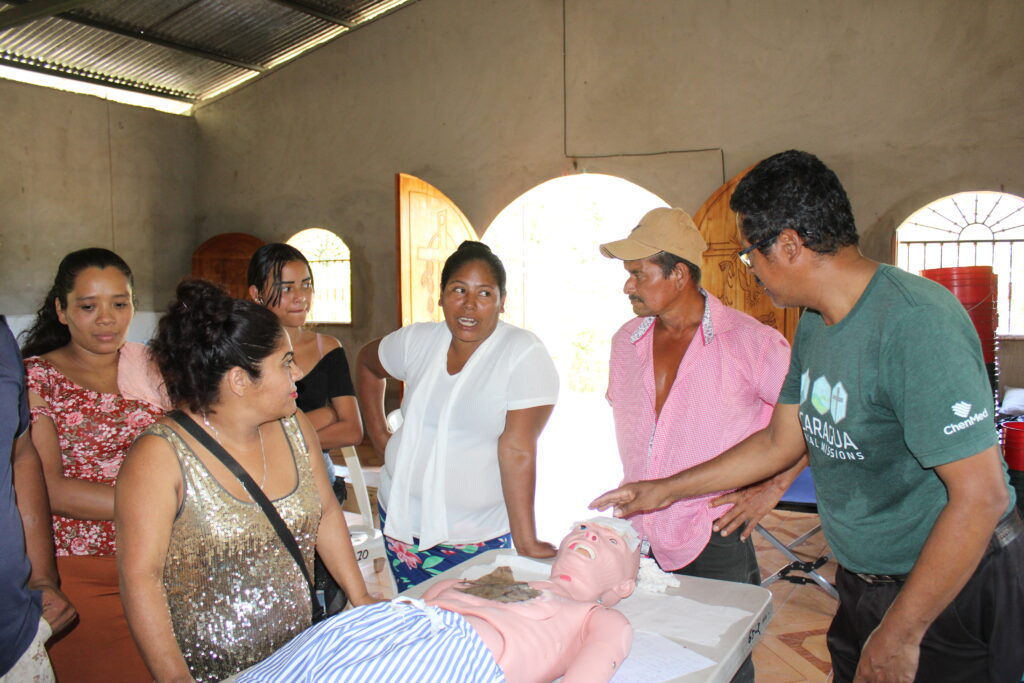
Although Ada Gloria has been serving as a community health volunteer for more than six months, she learned something she did not know before: when a person is bleeding, you should not remove the cloth or gauze that is already soaked with blood. Instead, you place another one on top and continue applying pressure.
That detail may seem small, but in an emergency, it can make a major difference.
Ada Gloria’s story also shows how health knowledge can move through families and communities. When she had to leave the country for a period of time, she shared some of what she had learned with her daughter, Jenny. At only 15 years old, Jenny has already begun to understand the importance of helping other women in her community access information about family planning and sexual health.
For Ada Gloria, speaking openly with her daughter about sexual health is deeply personal.
“I had my first baby when I was 14,” she shared.
That experience motivates her to speak without shame or taboo. She wants her daughter, and other girls in her community, to have information, guidance, and support so they can make healthier decisions about their bodies and their futures.
In communities where access to health care can be limited, every workshop, every conversation, and every practical lesson matters. A wound care training does more than teach people how to respond to an injury. It helps correct risky practices, builds confidence, and prepares more people to act with care when someone needs help.

Thanks to the commitment of community leaders, local health workers, and the support of people like you, more families are gaining tools to protect life in their own communities.
Because learning how to care for a wound is also learning how to better care for one another.