
Every year, community health volunteers from rural Nicaragua travel to Nejapa for our Annual Gathering. This year, they named the hardest parts of their work, had their own medical checkups and went home celebrated.
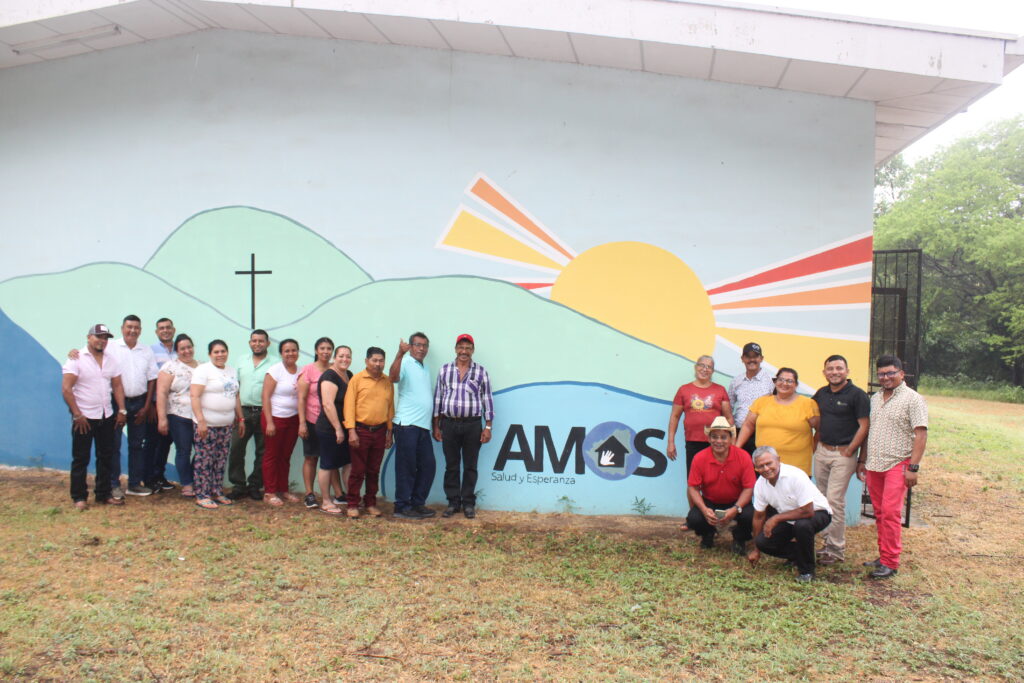
In rural villages across Nicaragua, when a neighbor’s blood pressure needs checking at night or someone gets hurt far from the nearest clinic, the person who shows up is often a community health volunteer. They aren’t paid to do it. They go because it’s their village.
Once a year, AMOS invites these volunteers to make the trip to Nejapa, Managua, where our offices are. We set aside a few days for learning, reflection and care, and we use the time to thank them for everything they do.
This year’s Annual Gathering took place in November. Volunteers came from rural areas all over the country, and many of them spent several hours on the road to get here.
Looking back at 2026
We started by looking back at the year. After a devotional and a welcome from our Executive Director, Gabriella Woo, volunteers from different regions shared the community actions that worked best for them in 2026. Each one had found something that worked in their own village, and now they could pass it on to the others.
Naming what’s hard

Next, the volunteers split into small groups to name the hardest parts of their work. Here’s what they listed:
- An increased need for supplies to treat injuries
- Glucometer strips and blood-pressure cuffs for patients living with diabetes and hypertension
- Limited resources to call for help in an emergency
Next to each problem, they wrote down how they’ve been solving it so far. They buy supplies with their own money and borrow a neighbor’s phone credit to call for help. When there are no gloves, some have even used plastic bags.
That list shows how committed they are, and it also shows us where we need to support them better.
New ideas to take home
The volunteers then worked in groups to design new ideas for their villages, such as community health fairs and youth support networks. These are their plans, built from what they know their neighbors need.

A celebration of a year of showing up
And then we celebrated. A raffle of recognitions sent volunteers home with stuffed animals, new shoes and straw hats, and there was plenty of laughter along the way. Each volunteer also received a basket of basic food supplies, a small thank-you for a year of showing up.


Why this matters
No one pays these volunteers to walk to a neighbor’s house at night with a blood-pressure cuff. They do it because the people they care for are their neighbors.
Our donors make it possible for us to care for them the way they care for everyone else. If you’d like to stand with them all year long, join 52 Weeks of Hope and give $1 a week to support community health in rural Nicaragua.